Announcing the GAIA-Field Gravimeter

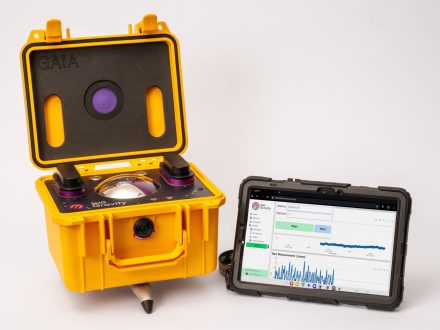
A new commercially viable gravity sensor has finally arrived thanks to advancements in micro-electro-mechanical systems (MEMS) technology. Terraplus is pleased to introduce the GAIA-Field Gravimeter. This compact, rugged, and highly sensitive unit will enable faster, more cost-effective, and non-invasive subsurface analysis, unlocking new opportunities in exploration, infrastructure, security, and environmental monitoring.

The GAIA-Field incorporates a Vibrating Beam Accelerometer (VBA), a type of MEMS sensor which uses high-performance inertial sensors that measure acceleration by detecting changes in the resonant frequency of micro-machined silicon beams under stress. Unlike capacitive MEMS that measure displacement, VBA MEMS (a type of resonant MEMS) offer superior stability, higher resolution, and a wider dynamic range.

The MEMS sensor is packaged in a highly robust, three stage, thermal controlled, vacuum sealed gimbal which includes a tilt sensor also referred to as the GAIA-Core, minimizing any effects from shock and changes in pressure or temperature.

Designed for gravity measurement with a resolution of at least 0.01 μGal and with a <5 μGal standard deviation at 180s, the GAIA-Field finally solves the need for a low-cost, portable, scalable, and reliable sensing method with the fitted internal gimbal and tilt sensor. During each measurement the sensor is adjusted to gravity maximum and the tilt is continuously monitored and displayed during data acquisition. This ensures that data is collected within the allowable tilt range and enables real-time correction of any remaining tilt effects.

Field measurements are taken by accessing a smart interface through a WiFi connected control unit such as a computer, phone, or tablet using the GAIA-Field web interface. The sensor can be configured to acquire repeated readings, depending on data requirements. The data is automatically stored and can be downloaded later for further use. The instrument is compact with the sensor, electronics, batteries, and other components integrated into a single housing. Two Li-ion rechargeable batteries (one for use and the other as a back-up) provide sufficient power to operate the instrument throughout a normal survey day with a minimum of 20 hours of continuous operation.

Providing a practical and cost-effective solution, the GAIA-Field Gravimeter serves as a bridge between traditional mechanical gravimeters and the emerging potential of larger, high-cost quantum gravimetry.

To learn more about how the GAIA-Field can support your operations, contact us today. Terraplus offers both sales and rental options – reach out to our team to explore the best solution for you.

Re-Introducing the GEM-2 and Advantages of Multi-Frequency EMI Mapping
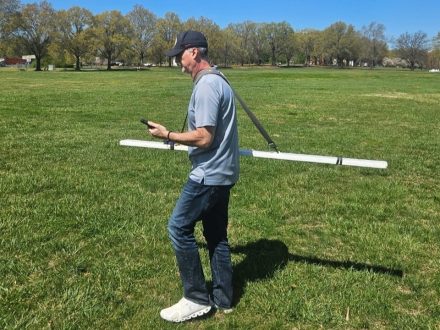
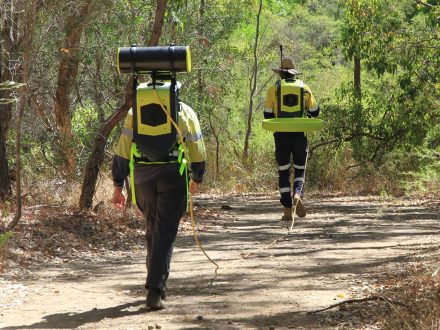
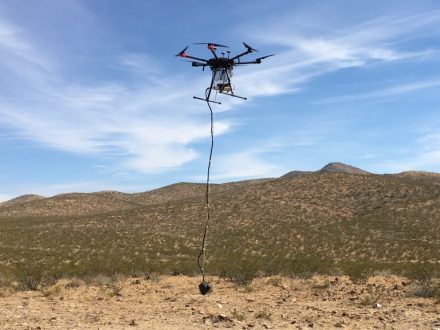
Of all the many geophysical exploration techniques, the electromagnetic (EM) method provides significant advantages for shallow geophysical exploration. The GEM-2 is a handheld, digital, multi-frequency broadband electromagnetic sensor weighing only 3.6 kg and is ready to be deployed by drones and UAVs. It operates in a frequency range of about 30 Hz to 93 kHz and can transmit an arbitrary waveform containing multiple frequencies. The unit is capable of transmitting and receiving any digitally-synthesized waveform by means of the pulse-width modulation technique.

The built-in operating software allows a surveyor to cover about one acre per hour at line spacings of 2 metres. Along a survey line, the data rate is about 5 per metre, resulting in about 20,000 data points per acre per hour. Such portability, survey speed, and high data density are important requirements for geophysical surveys at environmental sites.

Depth of exploration for a given earth medium is determined by the operating frequency. Therefore, measuring the earth response at multiple frequencies is equivalent to measuring the earth response from multiple depths. Hence, such data can be used to image a 3D distribution of subsurface objects. Results from several environmental sites indicate that multi-frequency data from the GEM-2 is far superior to data from single-frequency sensors in characterizing buried, metallic and non-metallic targets.

The GEM-2 offers significant advantages over geometrical single-frequency sensors by providing depth-dependent information, superior target discrimination, and better performance in challenging soil conditions. While single-frequency sensors are generally limited to mapping horizontal surface conductivity, multi-frequency systems can be used to invert data to model vertical electrical conductivity changes.

For depth-dependent information (Vertical Sounding) a single-frequency sensor using different coil separations, also known as geometrical sounding, only provides an “apparent conductivity” value that is a weighted average of all material within its sensitive volume. It cannot distinguish whether a high reading comes from shallow or deep soil. However, because electromagnetic penetration depth is frequency-dependent (low frequencies penetrate deeper, high frequencies are shallower), multi-frequency sensors like the GEM-2 can step through different frequencies allowing the user to invert this data to produce a vertical profile of electrical conductivity to determine if a target is shallow or deeply buried.

Different types of metals (ferrous, non-ferrous) respond best to different frequencies. Multi-frequency detectors like the GEM-2 provide superior discrimination because they analyze how an object responds across a range of frequencies to identify its composition, significantly reducing false positives from trash. They are also capable of detecting small, valuable targets located next to large pieces of iron trash—which single-frequency sensors often miss.

Ultimately, the GEM-2 is the “Swiss army knife” for geophysical applications and can be used in a variety of ways for effective mapping of permafrost boundaries, landfills, contaminant plumes, archaeology, forensics, precision agriculture, geology and geotechnical environments, as it provides a quick and efficient way to model the thickness of layers rather than just their presence.

Think the GEM-2 might be a fit for your needs? Whether you’re looking to acquire a system or prefer the flexibility of renting, we’d be pleased to assist. Contact our team to learn more.

The MIRA Compact 3D GPR Array is Here

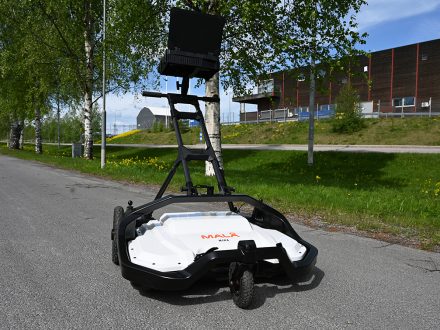
Introducing the MIRA Compact, the next-generation 3D GPR array solution for high-detail mapping of the subsurface.

Using a 500 MHz centre frequency, the MIRA Compact can collect up to 30 data channels simultaneously through the use of any transmitter-receiver combination in the whole array. With its 6.5 cm channel spacing, it allows for the collection of precise, high resolution data.

Designed and optimized for any hand-pushed 3D GPR mapping project, the MIRA Compact is an ideal solution for increasing productivity across a wide-range of applications, including utility mapping, archaeological prospection, and general ground investigations.

Interested in testing the all new MIRA Compact? Terraplus will soon have a system available in our rental pool. Contact us to learn more.

New High Power Transmitters

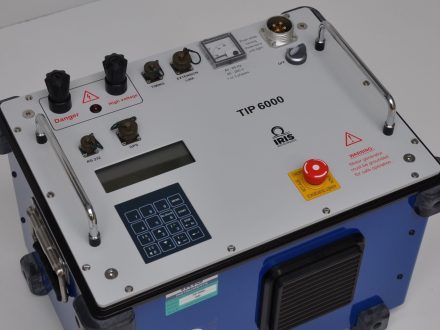
Introducing the TIP 6000 and TIP 12000 high power 6 kW and 12 kW transmitters for time domain IP and deep resistivity surveys.

These new transmitters offer current and voltage regulation with high stability, allowing for exceptionally accurate measurements.

We’ve now added the TIP 6000 to our rental pool. Contact us to learn more and try it for yourself.

Introducing the Easy Locator Core
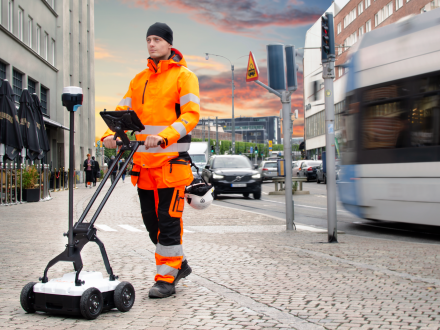
The Easy Locator Core is the latest generation GPR solution for utility locating professionals, featuring wireless data collection and the all new MALÅ AI for real-time interpretation support. It’s compact and lightweight, easy-to-use, and cloud-connected to MALÅ Vision for instant processing in the field.

The newly launched Easy Locator Core is also available for rental. Contact us to learn more and test the system for yourself.

DRONEmag UAV Magnetometer for Rent

The DRONEmag UAV magnetometer is now available for rent, joining our rental AirBIRD as an additional UAV magnetometer rental solution.

The DRONEmag comes complete with high-sensitivity GSMP-35U sensor, GPS, and laser altimeter. With the included Li-ion battery, the total system weight is 1.8 kg, making it an ideal choice for a variety of drone platforms.

Interested in a rental? Contact us to learn more.

Photo Credit: MWH Geo-Surveys

Hyperspectral Imaging Sensors Now Available
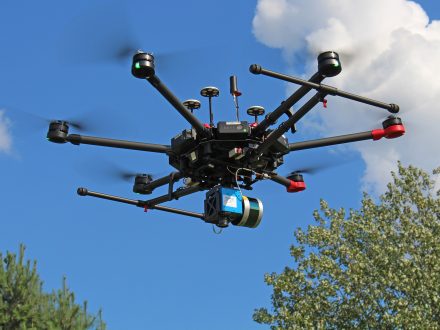
We’re excited to announce the addition of a wide-range of hyperspectral imaging sensors for sale.

Hyperspectral imaging allows for the accurate classification and identification of minerals based upon chemical signatures obtained in the shortwave-infrared (SWIR) region. It also enables several other remote sensing applications from agriculture to civil infrastructure inspection.

Sensors are available for a variety of spectral ranges, from UV-VIS to SWIR and beyond. These high-resolution instruments are small, lightweight, rugged, and feature a wide field of view. They can be integrated with GPS, IMU, and LiDAR for use on UAVs or other aircrafts and are also available as pan-and-tilt, rotary-stage, and scanning kit configurations for ground applications.

Holiday and Lockdown Update

Please note that the Terraplus office will be closed for the holidays between December 25 and January 3, with our last working day being December 24.

As Terraplus continues to be considered an essential business in Ontario based on the recent lockdown guidance, we will be reopening on January 4, 2021.

Happy holidays from the Terraplus team and all the best for the New Year!

Introducing the GPR Controller App

The Controller App for GPR data acquisition is now available for use with App-Enabled products, such as the GroundExplorer’s WiFi antennas.

Running on recommended Android devices, the Controller App is a cost-effective alternative to our existing GPR monitor solutions and allows for the efficient and wireless collection of data in the field. It also provides direct access to MALÅ Vision cloud-based services, such as data storage, analysis, processing, interpretation and reporting on GPR data and projects.

Learn more about the Controller App in our updated brochure for the GroundExplorer GPR system.


WellCAD Version 5.4 Is Here!

WellCAD v5.4 is now available, featuring a new Core Shifter and structure reorientation tool as well as a fully revised Full Waveform Sonic module with new Velocity Analysis workspace. Refer to the Release Note for additional information on what’s new.

For customers under the Maintenance & Support plan, WellCAD v5.4 is included in your subscription. Contact us to update your license to the latest version. If you haven’t subscribed yet and are interested in learning more, we’d be pleased to speak with you about the benefits and latest updates available.